
Looking for simple ways to keep your toddler happy and occupied indoors? Whether it’s a rainy afternoon, a hot day, or a time when outdoor activities aren’t possible, these fun indoor activities can turn an ordinary day at home into something special.
Keeping a toddler entertained can be challenging, especially when little ones seem to lose interest in toys and games quickly. As a parent, you may find yourself constantly thinking of new ways to keep your child engaged without relying on television or electronic devices.
Fortunately, entertaining toddlers doesn’t require expensive toys, complicated crafts, or elaborate preparations. Everyday household materials, simple games, and creative play ideas can provide plenty of opportunities for fun and learning.
Indoor play is also an important part of early childhood development. Through different activities, toddlers can practice coordination, strengthen their hand muscles, develop language skills, explore their imagination, and learn how to solve simple problems.
At The Essential Nest, we believe that meaningful family moments don’t have to be complicated. If you’re searching for affordable and enjoyable ways to spend time with your little one, here are 15 easy indoor activities for toddlers that combine entertainment, creativity, and early learning.
1. Build a Cozy Pillow Fort at Home
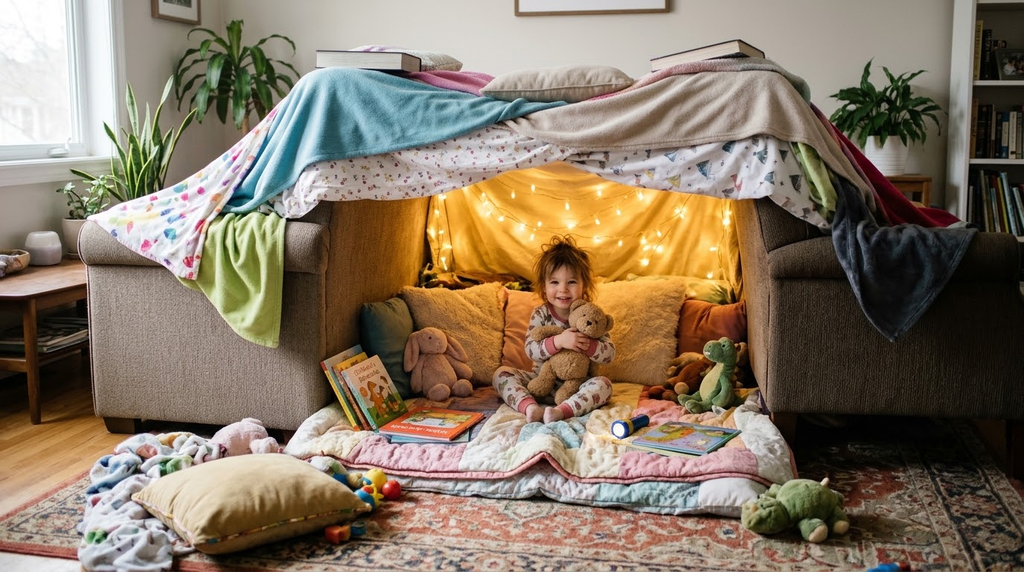
Creating a pillow fort is a wonderful way to transform an ordinary living room into a little world of imagination. All you need are a few pillows, lightweight blankets, cushions, and sturdy furniture arranged safely to create a cozy play space. Your toddler can use the fort as a pretend house, reading corner, or secret hideaway.
Make the experience more exciting by letting your child choose which stuffed animals, picture books, or favorite toys to bring inside. Encourage them to help arrange the soft cushions and decide how their special space should look. This simple activity supports creativity, decision-making, and imaginative play.
Parent tip: Keep the fort low and stable. Avoid heavy objects, unstable furniture, and blankets that could cover your toddler’s face. Stay nearby while your child plays.
2. Play an Easy Color Sorting Game
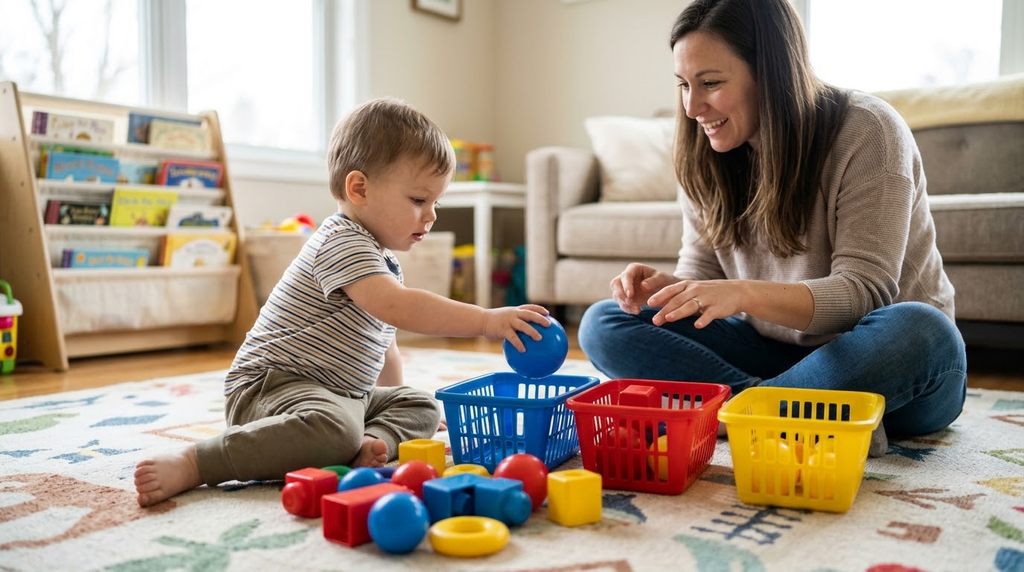
A color sorting game is an enjoyable way to introduce toddlers to basic colors while encouraging hands-on learning. Gather large, age-appropriate objects such as colorful blocks, toy balls, or plastic cups. Place several matching colored baskets or containers on the floor and invite your child to sort each object into the correct group.
Start with just two colors, such as red and blue, before introducing additional choices. As your toddler picks up each object, say its color aloud and encourage them to repeat the word. You can also ask simple questions, such as, “Can you find something yellow?”
This activity helps develop color recognition, early vocabulary, visual observation, and basic problem-solving abilities.
Parent tip: Choose large objects that cannot fit inside your toddler’s mouth. Avoid small sorting pieces that could become choking hazards.
3. Design a Fun Indoor Obstacle Course
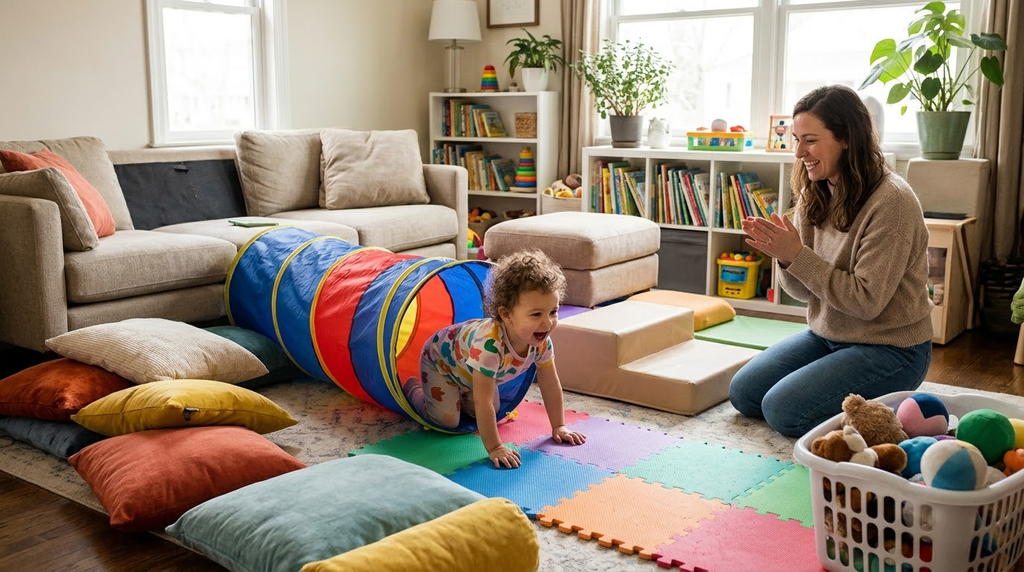
When your toddler has plenty of energy, an indoor obstacle course can be an excellent way to encourage movement without leaving home. Use soft cushions, play mats, and toddler-safe tunnels to create a simple route around your living room. Your little one can crawl through a tunnel, walk around cushions, or step over low obstacles.
Make the course enjoyable by giving easy instructions such as “crawl through,” “walk around,” or “touch the pillow.” You can demonstrate each movement first and encourage your toddler to follow along.
Obstacle courses provide opportunities to practice balance, coordination, body awareness, and gross motor skills. They can also introduce simple listening and language exercises.
Parent tip: Keep obstacles close to the floor, remove sharp furniture edges from the play area, and supervise your toddler throughout the activity. Never encourage climbing on unstable furniture.
4. Make Colorful Sticker Artwork
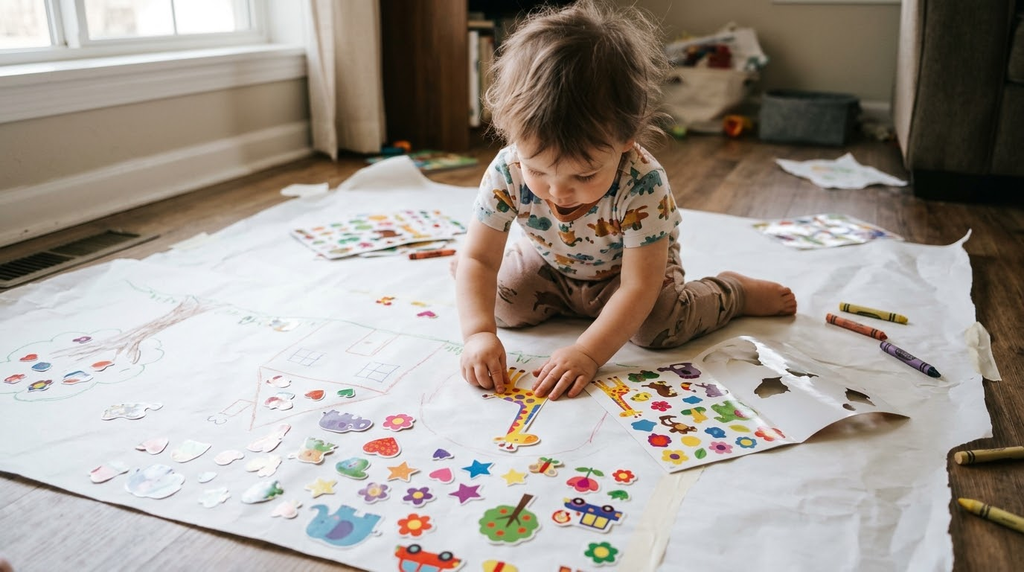
Sticker activities are an easy way to introduce toddlers to creative expression without requiring complicated art supplies. Prepare a large sheet of paper and a collection of age-appropriate, oversized stickers. Choose colorful designs featuring animals, shapes, flowers, or familiar objects.
Let your child decide where to place each sticker and encourage them to create their own picture. You can also draw simple outlines, such as a house or a tree, and invite your toddler to decorate the drawing with stickers.
Peeling and placing stickers can help develop finger control, hand-eye coordination, and fine motor skills. It also allows children to make independent creative choices.
Parent tip: Use large stickers without small detachable pieces. Supervise closely and keep sticker backing papers away from your toddler’s mouth.
5. Organize a Mini Indoor Dance Party
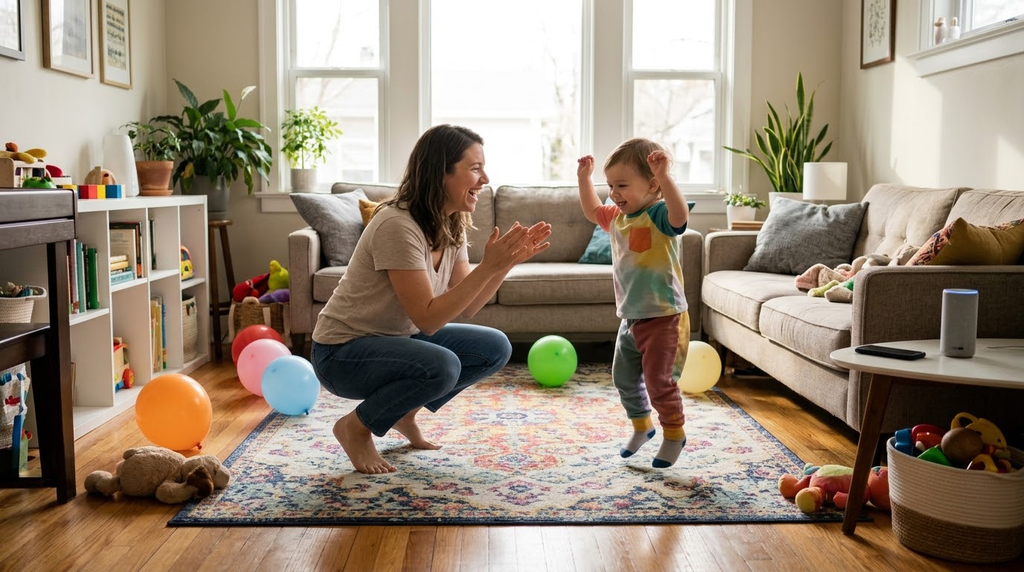
Turn an ordinary afternoon into a lively celebration with a little music and dancing. Toddlers naturally enjoy moving their bodies, and a simple dance party can give them an opportunity to release energy while having fun with the family.
Choose cheerful, age-appropriate songs and encourage your child to clap, sway, march, jump, or copy your movements. You can make things more interesting with a freeze dance game. Whenever the music pauses, everyone stops moving until the next song begins.
Dancing helps toddlers practice balance, coordination, rhythm, and body awareness. It can also encourage listening and imitation skills while creating enjoyable bonding moments.
Parent tip: Clear enough space for movement, remove slippery rugs, and keep the music at a comfortable volume. Adjust movements to your toddler’s abilities.
6. Explore Water Play Using a Small Basin
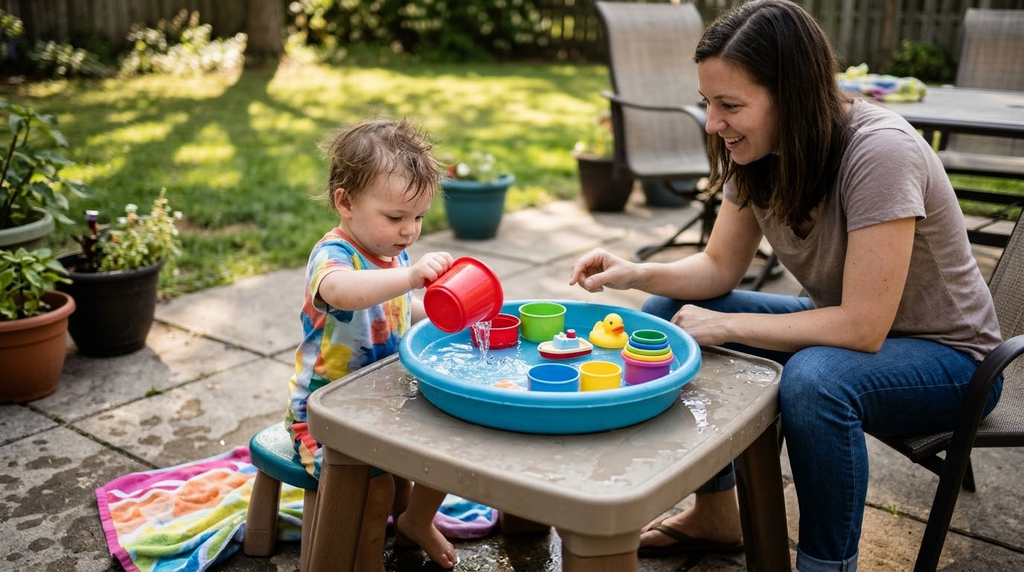
Water play can provide an enjoyable sensory experience using just a few simple household items. Place a shallow basin with a small amount of water on a stable, low surface. Add large plastic cups, suitable containers, or toddler-safe bath toys for your child to explore.
Show your toddler how to scoop water, pour it between containers, and watch how objects move or float. You can introduce simple words such as full, empty, wet, and dry while they experiment.
This activity encourages curiosity, hand-eye coordination, and early understanding of cause and effect. It can also provide an opportunity to introduce basic concepts through everyday play.
Parent tip: Water activities require continuous, hands-on adult supervision. Stay within arm’s reach at all times, even when using a very small amount of water. Empty the basin immediately after play.
7. Set Up a Homemade Playdough Station
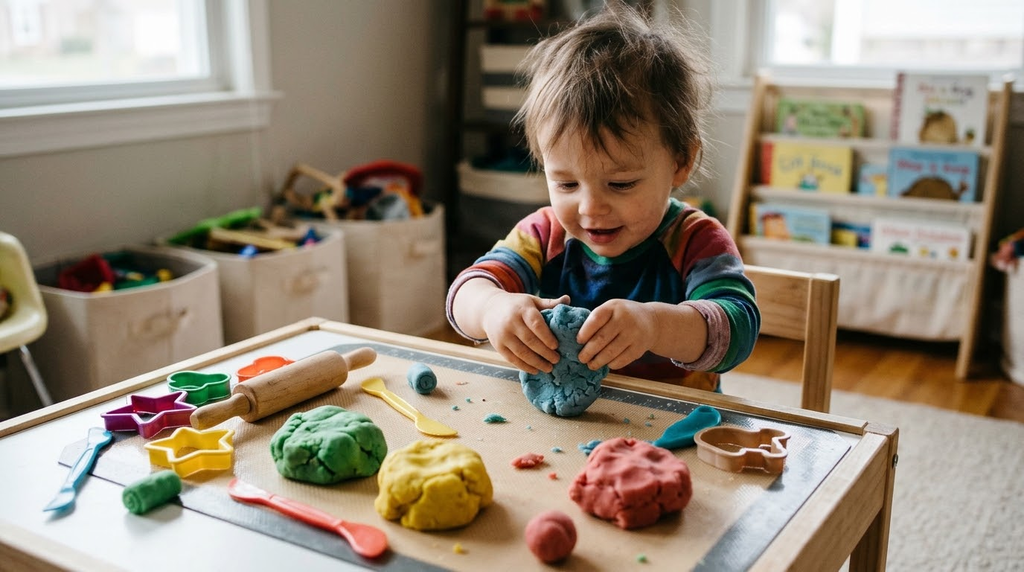
Playdough is a classic indoor activity that encourages toddlers to explore different textures and shapes. Prepare a small amount of age-appropriate, non-toxic playdough and place it on a clean table or washable play surface.
Invite your child to squeeze, roll, flatten, and shape the dough using their hands. You can demonstrate how to make simple balls, long rolls, or flat shapes. If your toddler enjoys copying activities, encourage them to make their own versions.
Working with playdough helps strengthen small hand muscles and supports fine motor development. It also introduces creative thinking and opportunities to explore different shapes and textures.
Parent tip: Choose products suitable for your child’s age and supervise closely. Playdough is not food, even when homemade, and should not be eaten. Avoid small tools or loose accessories.
8. Share an Interactive Picture-Book Reading Session
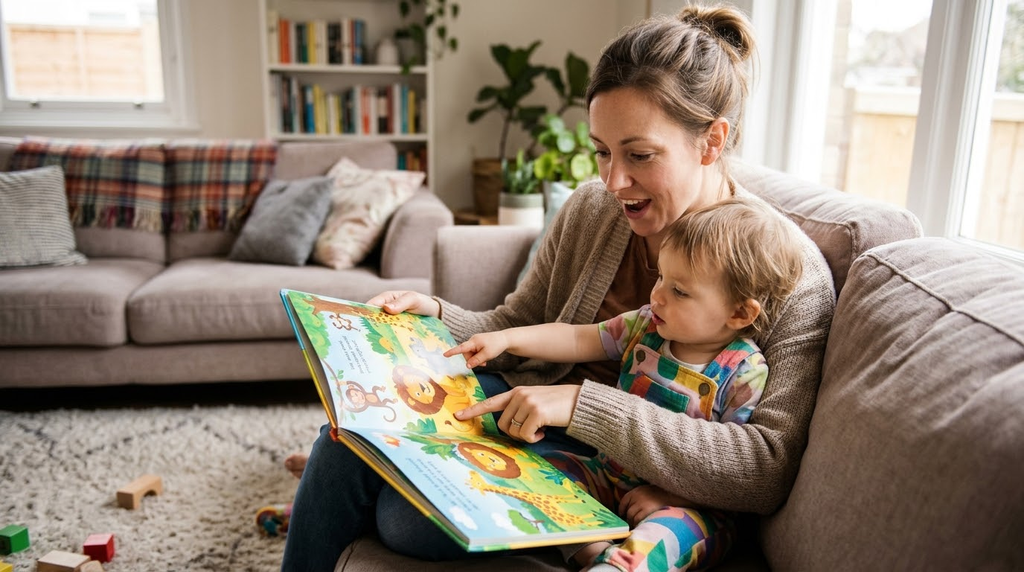
Reading together is one of the simplest and most meaningful indoor activities for toddlers. Choose picture books with bright illustrations, familiar animals, everyday objects, or short stories that are appropriate for your child’s age.
Instead of simply reading the words from beginning to end, make the experience interactive. Point to different pictures, name familiar objects, imitate animal sounds, and ask your toddler simple questions. For example, you might ask, “Where is the cat?” or “What sound does the duck make?”
These small interactions encourage language development, listening, memory, and communication. Reading together also creates a peaceful opportunity for parents and children to enjoy time together.
Parent tip: Allow your toddler to turn pages, point at pictures, and choose favorite books. Repeating the same story is perfectly fine when your little one enjoys it.
9. Create a Simple Toddler Art and Coloring Corner
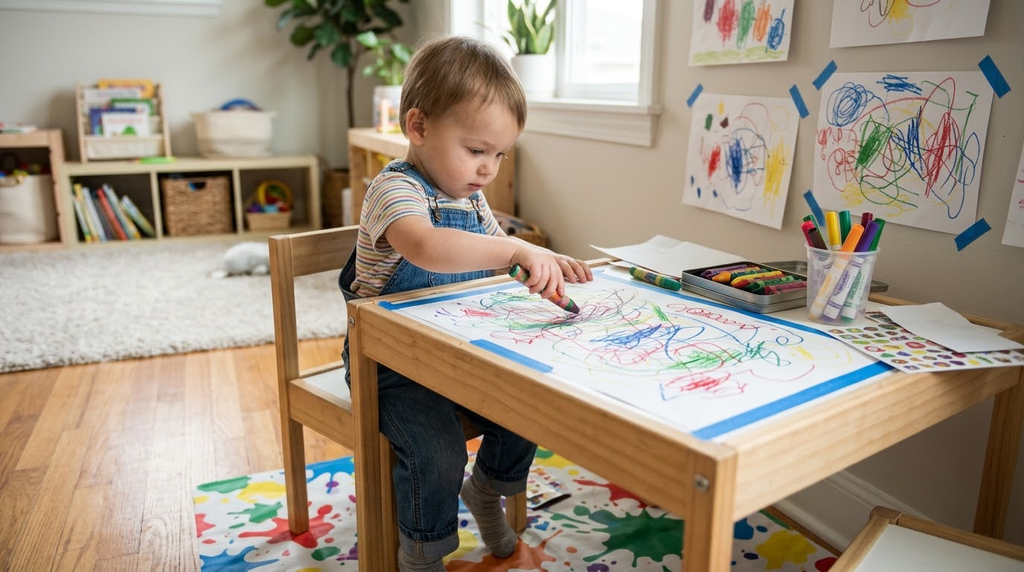
Give your little artist a chance to explore colors and creativity by setting up a simple art corner at home. Prepare large sheets of paper, washable crayons, and age-appropriate coloring materials. A small table or an easy-to-clean floor mat can serve as the creative workspace.
Encourage your toddler to draw freely without expecting perfect pictures. They might make colorful lines, circles, scribbles, or drawings inspired by familiar objects. You can introduce different colors and shapes while allowing your child to experiment independently.
Art activities help develop creativity, hand control, visual recognition, and self-expression. They also give toddlers the freedom to explore new ideas through simple materials.
Parent tip: Select non-toxic art supplies specifically designed for young children. Supervise closely and protect nearby furniture and flooring from accidental marks.
10. Try a Picture and Object Matching Game
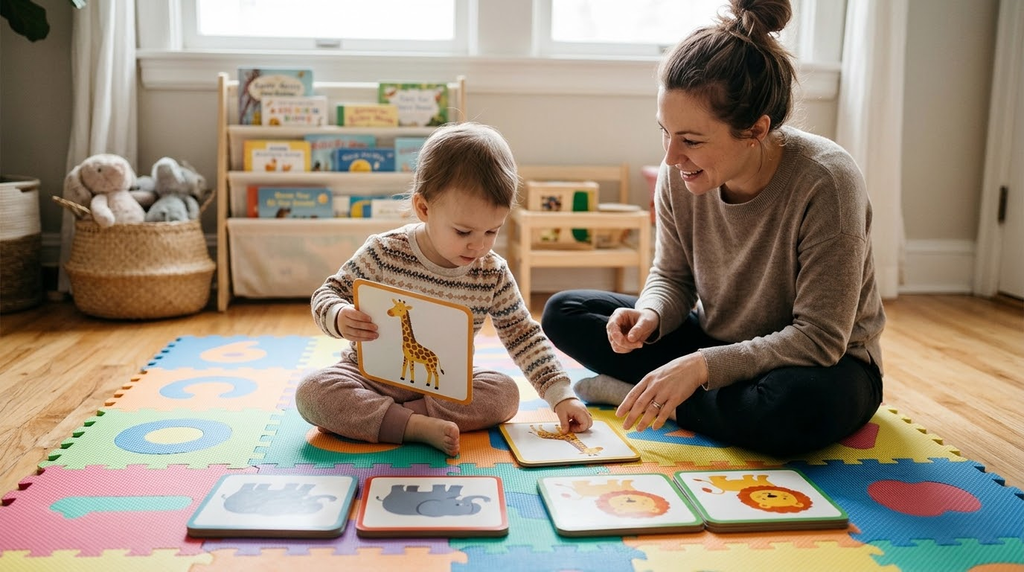
Matching games are a simple way to introduce toddlers to early problem-solving and observation. You can use large picture cards, familiar animal illustrations, or pairs of identical toddler-safe toys.
Place a few matching pictures or objects in front of your child and invite them to find the ones that look alike. Start with only two or three pairs so the activity remains easy and enjoyable. As your toddler becomes more comfortable, introduce additional choices.
You can also turn the game into a conversation by asking questions about the pictures. For example, ask your child to find two matching animals or identify objects with the same color.
Matching activities encourage concentration, visual recognition, memory, and early thinking skills.
Parent tip: Choose large, sturdy cards and objects without small detachable parts. Keep the activity relaxed and offer encouragement rather than expecting every match to be correct.
11. Build Creative Structures with Large Blocks
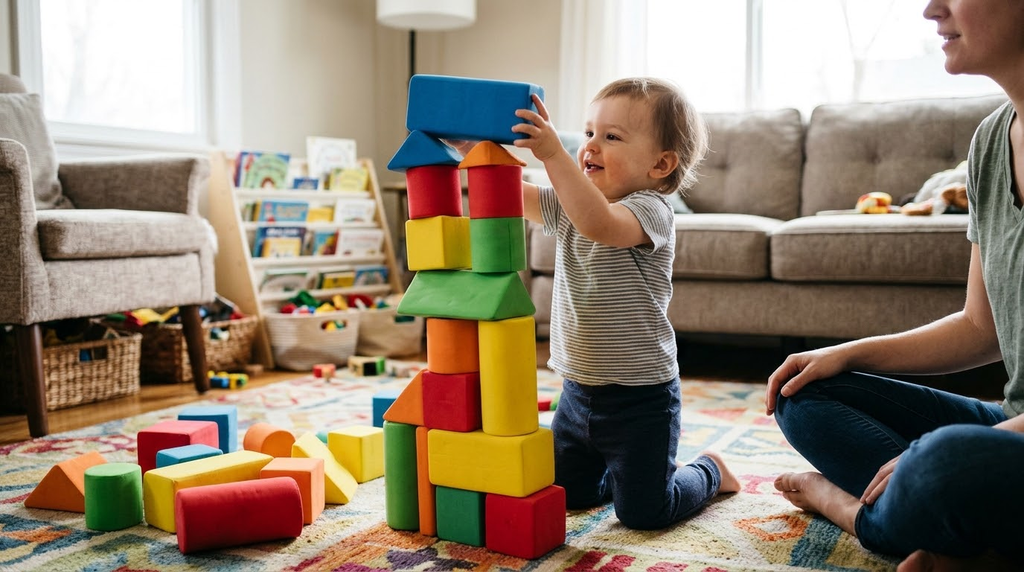
Building blocks are versatile toys that can keep toddlers interested in different types of creative play. Provide a collection of large, age-appropriate blocks and encourage your child to build simple towers, houses, bridges, or other imaginative structures.
You can join the activity by taking turns adding blocks or asking your toddler to create something using a particular color. If a tower falls over, make it part of the fun by encouraging your little one to build it again.
Block play supports spatial awareness, hand-eye coordination, creativity, and early problem-solving. Toddlers can also begin learning simple concepts such as height, size, balance, and shapes through everyday building activities.
Parent tip: Use large blocks designed for toddlers, without small detachable components or sharp edges. Give your child plenty of room to experiment and build at their own pace.
12. Pretend to Run a Little Grocery Store
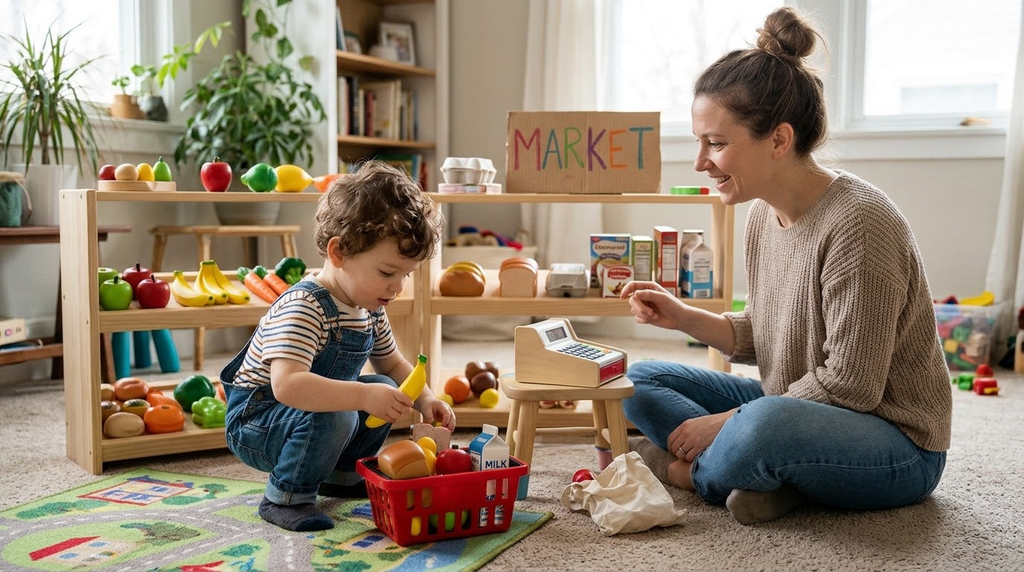
A pretend grocery store is a fun way to introduce toddlers to familiar everyday activities through imaginative play. Create a small shopping area using toy food, clean empty containers, a basket, and a reusable shopping bag.
Invite your child to pretend to shop for groceries, choose different items, and place them inside the basket. You can take turns playing the customer and shopkeeper, making the experience more interactive.
Introduce simple vocabulary by naming familiar foods such as apples, bananas, bread, and milk. You can also ask your toddler to find a particular item or group similar foods together.
This activity encourages communication, imagination, social interaction, and early understanding of everyday routines.
Parent tip: Use clean, safe containers with no sharp edges, loose caps, or small parts. Avoid real packaging that could contain leftover cleaning products or other hazardous substances.
13. Complete an Age-Appropriate Puzzle
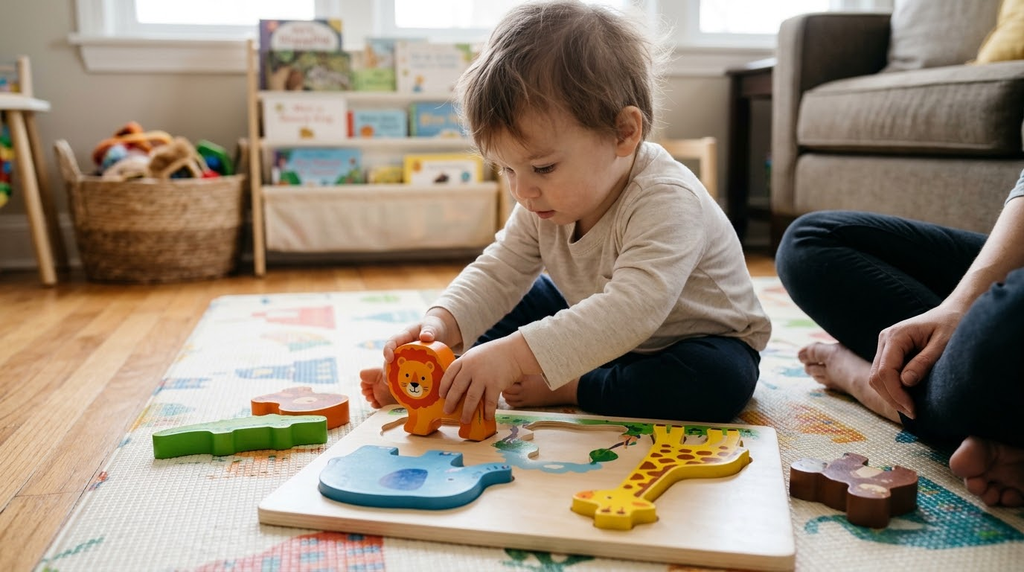
Puzzles provide toddlers with opportunities to explore shapes, patterns, and simple problem-solving. Start with chunky wooden puzzles or large-piece board puzzles specifically designed for your child’s age group.
Choose familiar pictures featuring animals, vehicles, fruits, or everyday objects. Show your toddler how to look at the shape of each piece and find the space where it belongs. Offer gentle guidance when needed, but allow your child to try independently.
Completing a puzzle can help develop concentration, visual recognition, hand-eye coordination, and patience. It also gives toddlers a sense of accomplishment when they successfully place a piece.
Parent tip: Choose puzzles with large, sturdy pieces and follow the recommended age range. Celebrate your child’s efforts rather than focusing only on completing the entire puzzle.
14. Prepare a Safe Homemade Sensory Play Bin
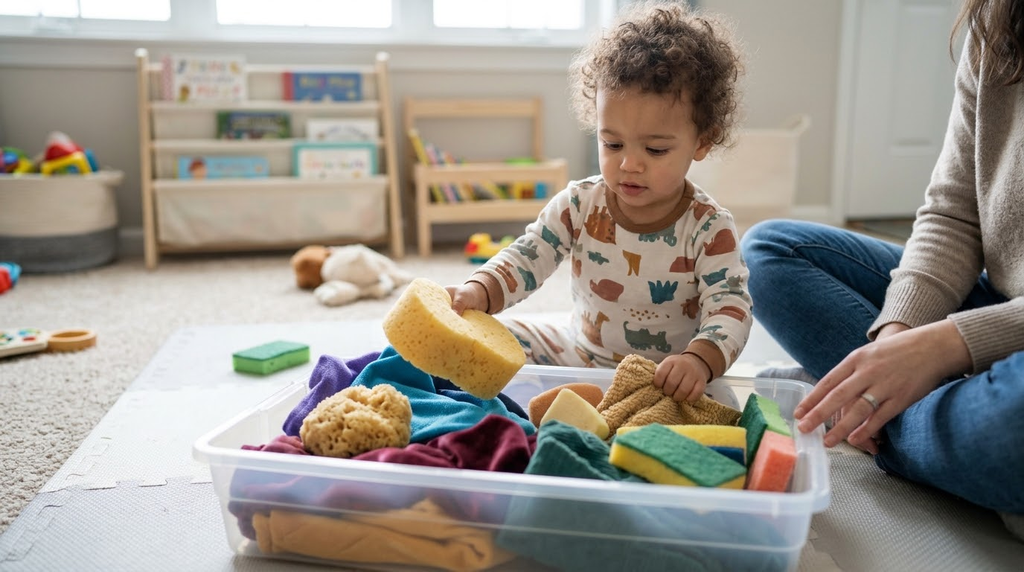
A sensory play bin offers toddlers an opportunity to discover different textures through hands-on exploration. You can create a simple version using a shallow container filled with large fabric squares, soft sponges, or other age-appropriate sensory toys.
Encourage your toddler to touch, move, and explore each material. Describe the textures using simple words such as soft, smooth, fluffy, and rough. You can also ask your child which materials feel different.
Sensory activities encourage curiosity, language development, and exploration. They can also help toddlers become familiar with different textures and sensations in a relaxed environment.
Parent tip: Avoid small fillers such as beads, dry beans, rice, buttons, and other objects that can cause choking. Use only materials that are appropriate for your toddler’s age, and supervise closely throughout playtime.
15. Enjoy a Simple Toddler-Friendly Kitchen Activity
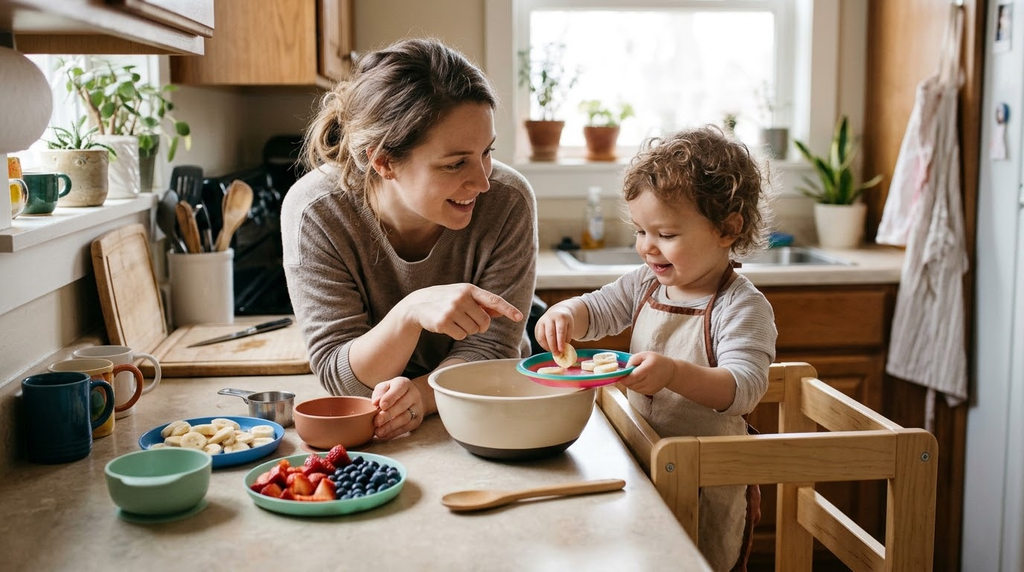
Toddlers often enjoy being included in everyday household activities, and simple food preparation can become an enjoyable learning experience. Choose an easy recipe that allows your little one to participate in safe, age-appropriate tasks.
Your toddler might help stir a cool mixture, add pre-measured ingredients to a bowl, or place large pieces of prepared fruit into a container. You can also introduce basic words such as mix, pour, stir, and measure while demonstrating each action.
Kitchen activities encourage independence, sensory exploration, communication, and participation in everyday family routines. They can also help children become familiar with different foods and ingredients.
Parent tip: An adult should handle knives, hot surfaces, electrical appliances, and all cooking involving heat. Avoid choking hazards, check for food allergies, and make sure any food offered is prepared in an age-appropriate way. Keep your toddler away from hot liquids and unsafe kitchen equipment.