
Getting ready to welcome your first baby? Preparing for a newborn can be exciting, but knowing which baby products are truly necessary isn’t always easy. This practical newborn checklist will help you organize your shopping and prepare for your little one’s arrival.
Becoming a mother for the first time brings plenty of wonderful moments, but it also comes with a long list of things to prepare. From choosing tiny outfits to organizing feeding supplies and creating a comfortable nursery, it is easy to feel overwhelmed by the number of baby products available.
The truth is that you don’t need to purchase every item marketed to new parents. What matters most is having practical, reliable essentials that support your baby’s everyday needs while making your new routine more manageable.
At The Essential Nest, we believe that preparing for parenthood should be simple, practical, and enjoyable. Whether you’re putting together your hospital bag, organizing your nursery, or shopping for your first baby, this guide covers 25 newborn essentials worth considering before your little one arrives.
Essential Baby Clothes for Your Newborn
Newborn clothing should be comfortable, breathable, and easy to change. During the first few weeks, babies may need several outfit changes throughout the day because of diaper leaks, milk spills, and occasional messes. Choose soft materials that feel gentle against delicate skin and designs that make dressing easier. You also don’t need to purchase too many newborn-sized outfits because babies grow quickly. Having a small collection of everyday clothing in different sizes will help you stay prepared without filling your drawers with clothes your baby may outgrow.
1. Newborn Bodysuits and Onesies
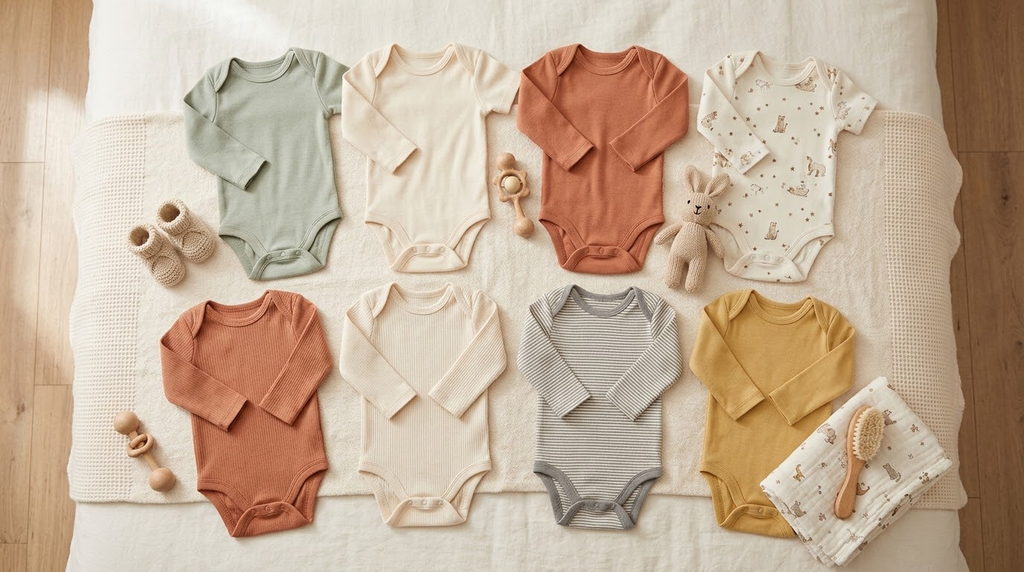
Bodysuits are among the most practical clothing items for a newborn. They can be worn on their own in warm weather or layered underneath pajamas when the temperature is cooler. Their convenient snap closures make diaper changes easier, especially during nighttime routines when you want to minimize unnecessary movement.
When shopping for bodysuits, consider soft cotton fabrics, comfortable neck openings, and snaps that are easy to fasten. Choose designs without uncomfortable tags or rough seams. Starting with approximately six to eight pieces in newborn and 0–3-month sizes is a reasonable option, although the number you need will depend on how frequently you do laundry.
2. Comfortable Baby Sleepers and Pajamas

Baby sleepers are useful for keeping your little one comfortable throughout the day and night. These one-piece outfits provide convenient coverage and reduce the need to coordinate separate clothing items. Many designs include front zippers or snap closures, making diaper changes easier for tired parents.
Look for lightweight, breathable materials that suit your local climate. If you choose zippered sleepers, protective fabric around the zipper can help prevent contact with your baby’s skin. Avoid clothing that is too tight or has loose decorative pieces that could create safety concerns.
3. Lightweight Muslin Swaddle Blankets
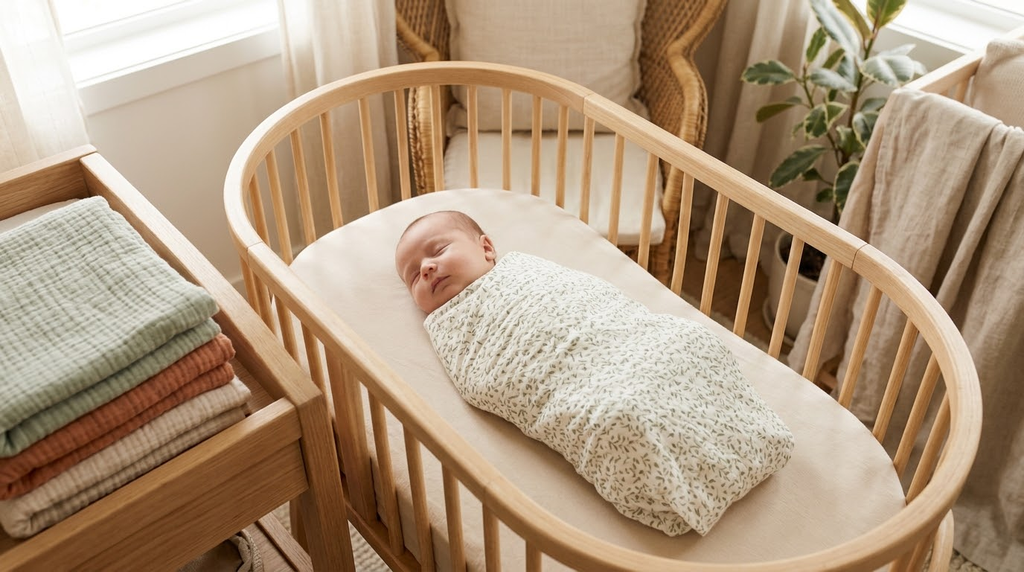
Muslin blankets are versatile baby accessories that can serve several purposes throughout the newborn stage. They can be useful for supervised cuddles, burping, or providing light coverage while feeding when appropriate. Their breathable fabric and lightweight construction make them convenient for everyday use.
Some parents also choose to swaddle their newborns for comfort. If you do, learn the correct technique and make sure your baby’s hips can move freely. Always place your baby on their back for sleep, and stop swaddling as soon as signs of attempting to roll appear. Never use weighted swaddles or place loose blankets in an infant’s sleep space.
4. Soft Baby Socks and Hand Mittens
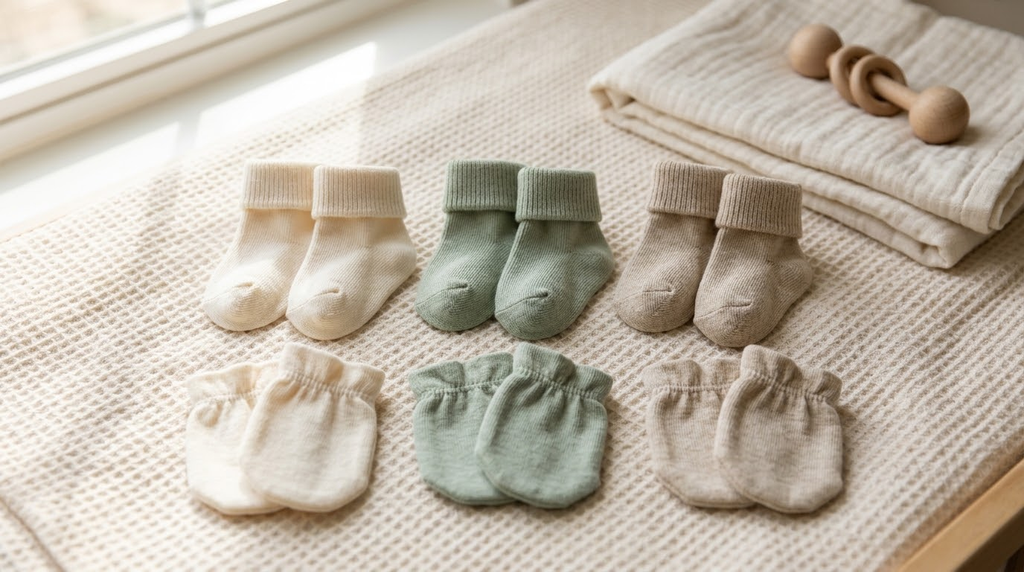
Newborn socks can help keep tiny feet comfortable, particularly in air-conditioned rooms or cooler environments. A few pairs are usually enough to start with because socks can easily become lost during everyday activities.
Hand mittens are sometimes used to reduce accidental facial scratches, but keeping your baby’s fingernails gently trimmed is another practical solution. Choose accessories with comfortable openings that do not leave marks or restrict circulation. Check your baby’s hands and feet regularly to make sure clothing and accessories are not making them too warm.
5. Newborn Caps and Lightweight Hats
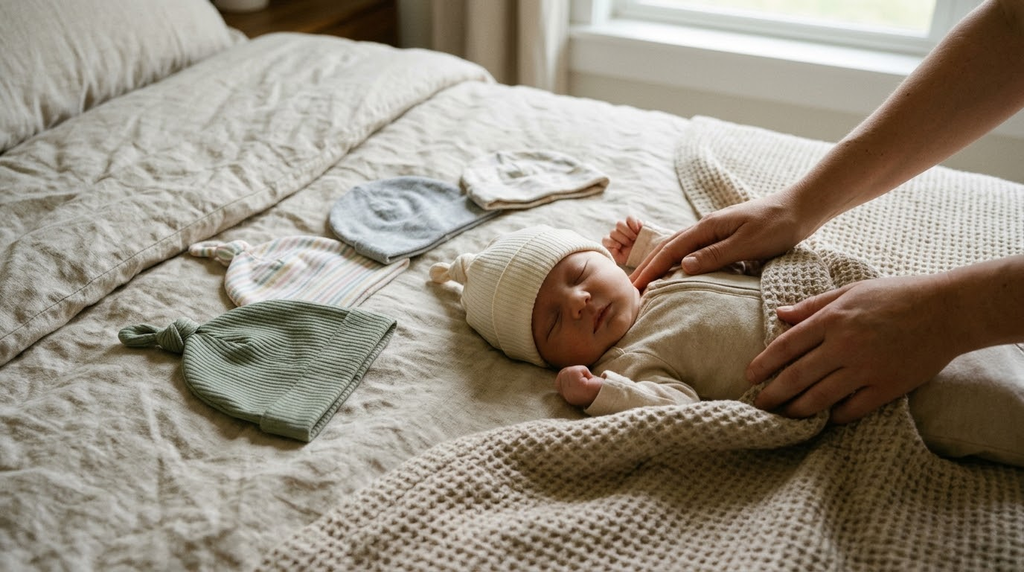
A soft baby cap may be useful immediately after birth or when taking your newborn outdoors in cooler weather. Babies can be sensitive to temperature changes, so appropriate clothing can help keep them comfortable during outings.
However, indoor hats are generally unnecessary once your newborn is settled and maintaining a comfortable temperature. Remove hats before placing your baby down to sleep because covering the head can contribute to overheating. Instead of automatically adding more layers, check your baby’s chest or back to determine whether they feel comfortably warm.
Everyday Feeding Supplies for New Parents
Feeding is an important part of newborn care, and having the right supplies nearby can make your daily routine easier. Whether you plan to breastfeed, use infant formula, or combine feeding methods, prepare only the equipment that suits your family’s needs. You can always purchase additional accessories once you understand your baby’s feeding routine. Keeping feeding products clean, organized, and easy to reach can also help reduce unnecessary stress during those busy first weeks at home.
6. Supportive Nursing Pillow
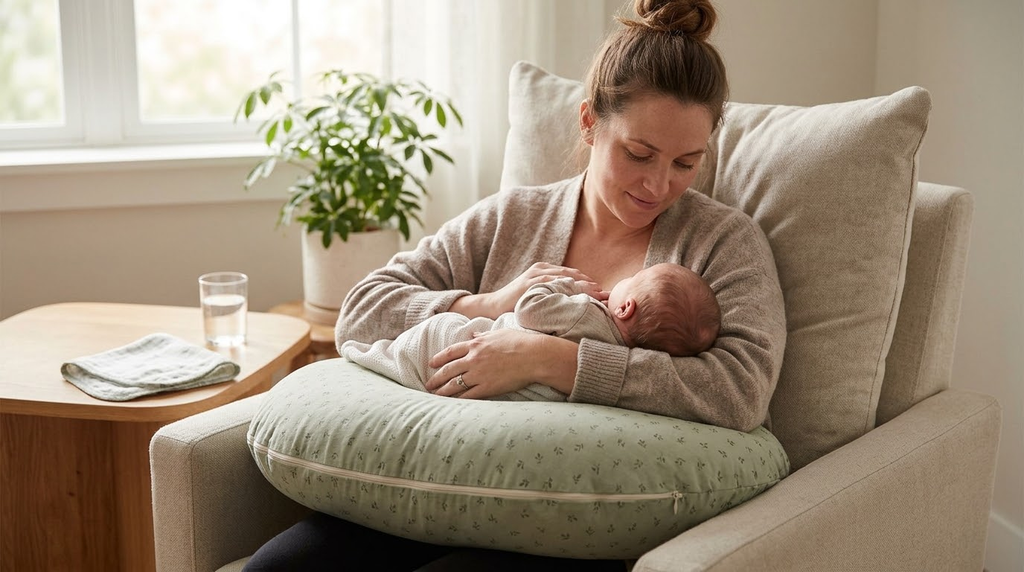
A nursing pillow can provide additional support for your arms and back during breastfeeding or bottle-feeding. Holding a newborn for extended periods may become uncomfortable, particularly while you’re adjusting to new feeding positions and routines.
Choose a pillow with a comfortable shape, supportive filling, and a removable cover that can be washed easily. A nursing pillow is designed to support supervised feeding, not to serve as a sleeping surface. If your baby falls asleep while feeding, transfer them to an appropriate, firm, flat, and level infant sleep surface.
7. Easy-to-Clean Baby Bottles
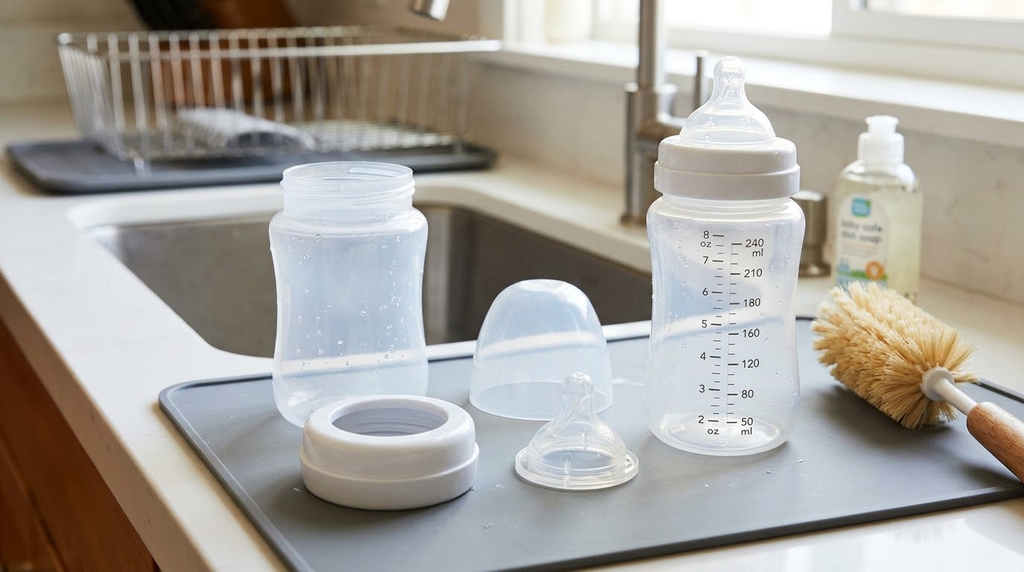
Baby bottles may be useful even if you initially plan to breastfeed. They can provide an option for expressed breast milk or formula feeding when needed. Having a small selection available before delivery can help you prepare without spending too much on equipment your baby may not use.
Look for bottles made from food-safe materials with clear measurement markings and age-appropriate nipples. Choose designs that are easy to take apart and clean thoroughly. Starting with a few bottles is often more practical than purchasing a large collection before discovering which type works best for your baby.
8. Dedicated Bottle Drying Rack
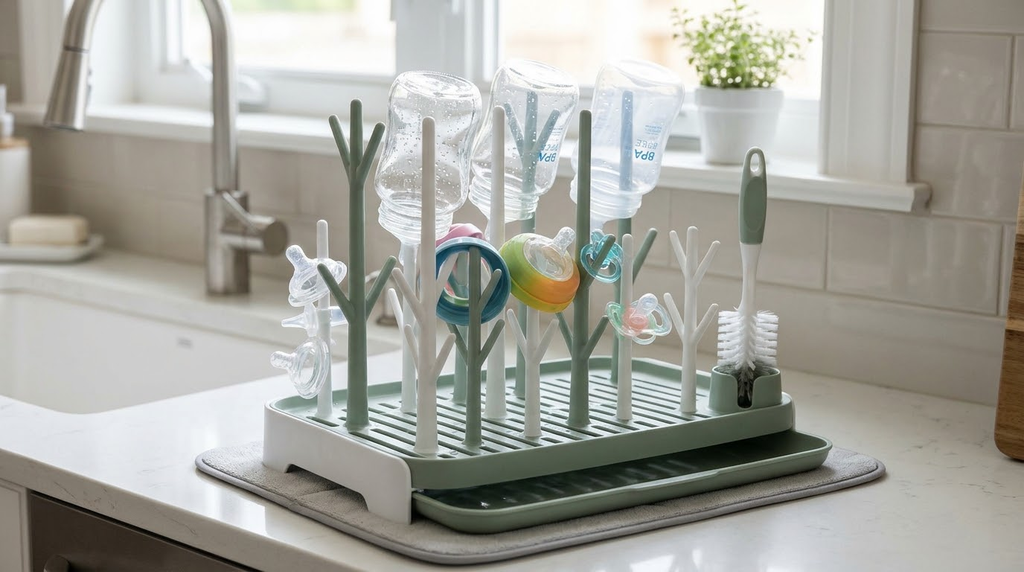
A bottle drying rack provides a designated area for clean feeding equipment to air-dry after washing. It can help keep bottles, nipples, and smaller accessories organized instead of leaving them scattered across your kitchen counter.
Consider a design with removable components, sufficient spacing, and surfaces that are easy to clean. Place the rack in a clean area away from food preparation messes and other potential contaminants. Allow feeding equipment to dry completely according to recommended cleaning instructions before storing it.
9. Bottle and Nipple Cleaning Brushes
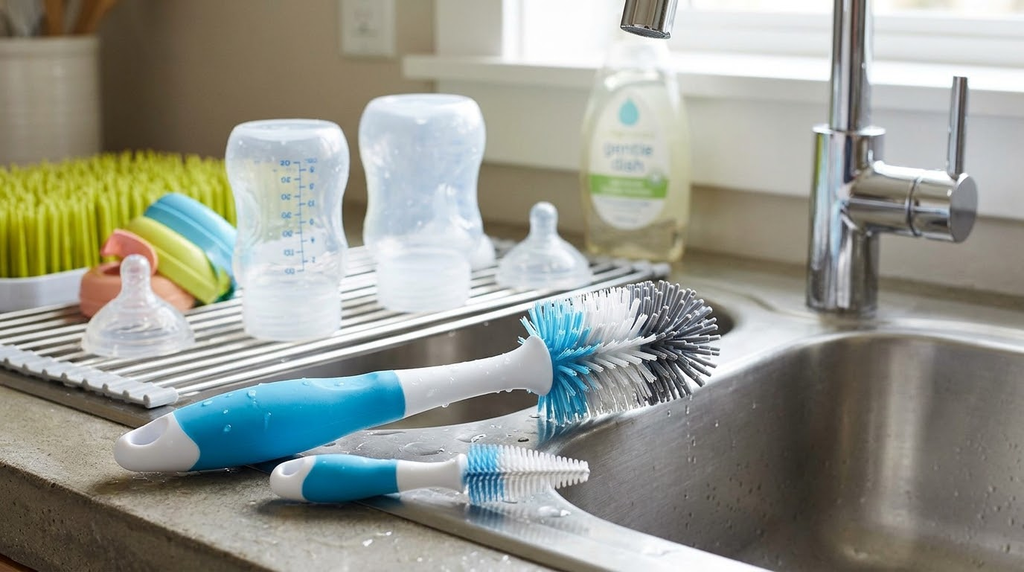
Cleaning newborn feeding equipment requires attention because milk residue can remain inside bottles and small accessories. A dedicated bottle brush helps reach the bottom and inner surfaces of bottles, while a smaller nipple brush can clean areas that larger brushes may not reach.
Choose brushes with comfortable handles and easy-to-clean materials. Wash bottles and feeding accessories according to their manufacturer’s instructions, and follow current infant feeding hygiene recommendations. Regular cleaning and appropriate sterilization are particularly important during the early months when babies are more vulnerable to infections.
10. Absorbent Baby Burp Cloths
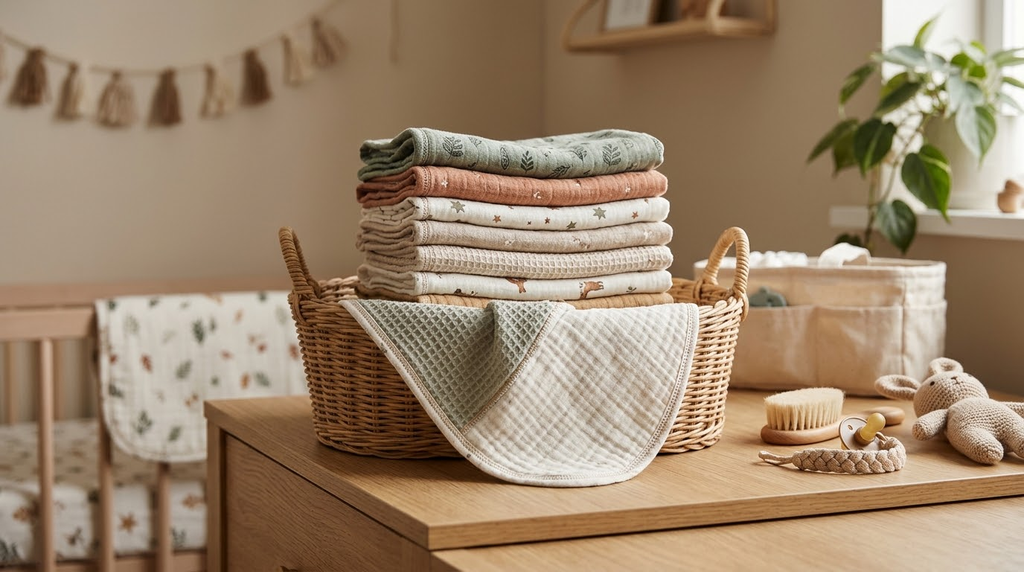
Burp cloths are simple accessories that many parents find useful throughout the day. They help protect clothing from milk dribbles, spit-ups, and small feeding messes. Keeping a few within reach can make feeding sessions more convenient, especially when you’re caring for your baby on your own.
Choose soft, absorbent fabrics that can withstand frequent washing. Cotton options are popular because they are comfortable and practical for everyday use. Around eight to twelve burp cloths can be a helpful starting supply, depending on your laundry schedule and how frequently your baby spits up.
Practical Diapering and Bathing Supplies
Newborns require frequent diaper changes, so preparing a comfortable and organized changing area can make daily care much easier. You’ll also need a few bathing products to keep your little one clean without overwhelming their delicate skin. Focus on practical supplies that are simple to use, easy to wash, and suitable for newborns. Keeping diapers, wipes, clean clothes, and other essentials together can save time, particularly during nighttime changes when you want everything within reach.
11. Newborn-Sized Diapers
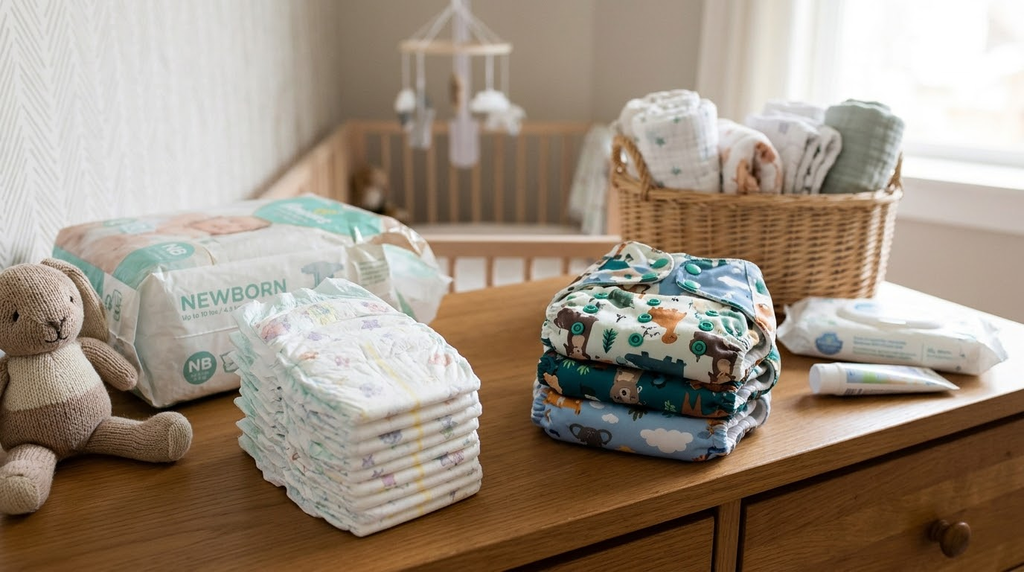
Diapers are among the first supplies you’ll need when bringing your baby home. Newborns typically require frequent diaper changes throughout the day, so having an appropriate supply ready is important.
You can choose disposable diapers or reusable cloth alternatives depending on your preferences, budget, and daily routine. Consider your baby’s expected size and the diaper manufacturer’s weight recommendations when selecting a product. Avoid purchasing too many newborn-sized packages before delivery because some babies outgrow this size quickly. A smaller initial supply gives you flexibility to adjust as your baby grows.
12. Gentle Baby Wipes
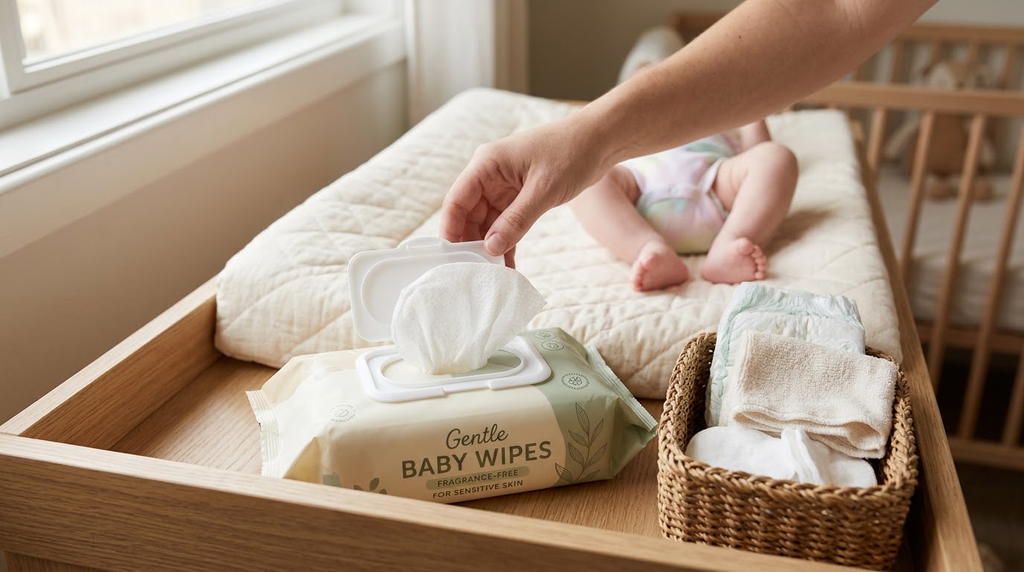
Baby wipes are convenient for cleaning during diaper changes and handling everyday messes. For newborns, look for fragrance-free options designed for sensitive skin. Products with simple formulations may be preferable, particularly if your baby is prone to irritation.
You can also use soft cotton pads or washcloths with warm water as an alternative when cleaning sensitive areas. Whichever option you choose, avoid rubbing your baby’s skin harshly. Gently clean the area and allow it to dry before putting on a fresh diaper.
13. Protective Diaper Rash Cream
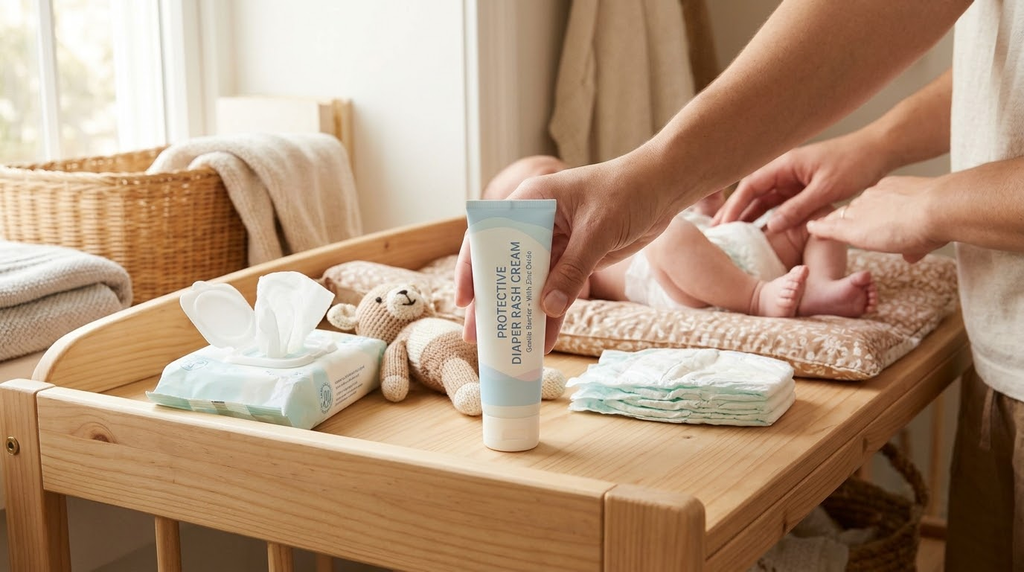
Diaper rash cream can be a useful addition to your newborn care supplies. Barrier creams containing suitable ingredients, such as zinc oxide or petroleum jelly, may help protect the skin from prolonged moisture and friction.
Choose a product intended for infant use and follow the directions on its packaging. Apply it as recommended, particularly when your baby’s skin needs additional protection. If a rash becomes severe, spreads, develops blisters, or does not improve with basic care, contact your pediatrician rather than repeatedly trying different products.
14. Waterproof Baby Changing Mat
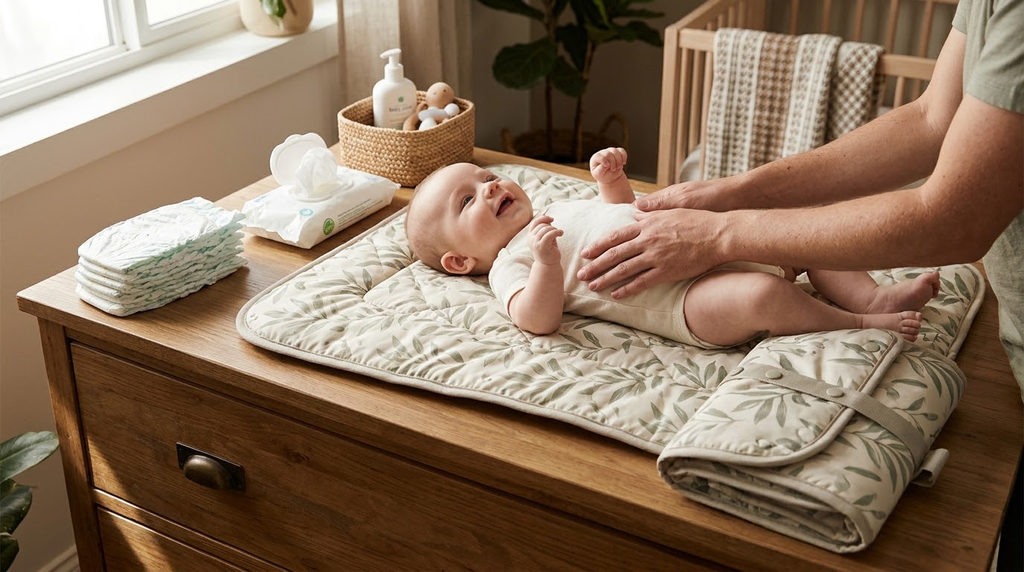
A waterproof changing mat provides a convenient surface for diaper changes at home or while traveling. Its protective material helps prevent small accidents from soaking into furniture, making everyday cleanup easier.
Look for a mat with a comfortable surface and material that can be wiped clean. Choose a design that fits your available changing area and is easy to store when not in use. Always place the mat on a stable, safe surface and keep one hand on your baby. Never leave a newborn unattended on an elevated changing table.
15. Convenient Baby Bathtub
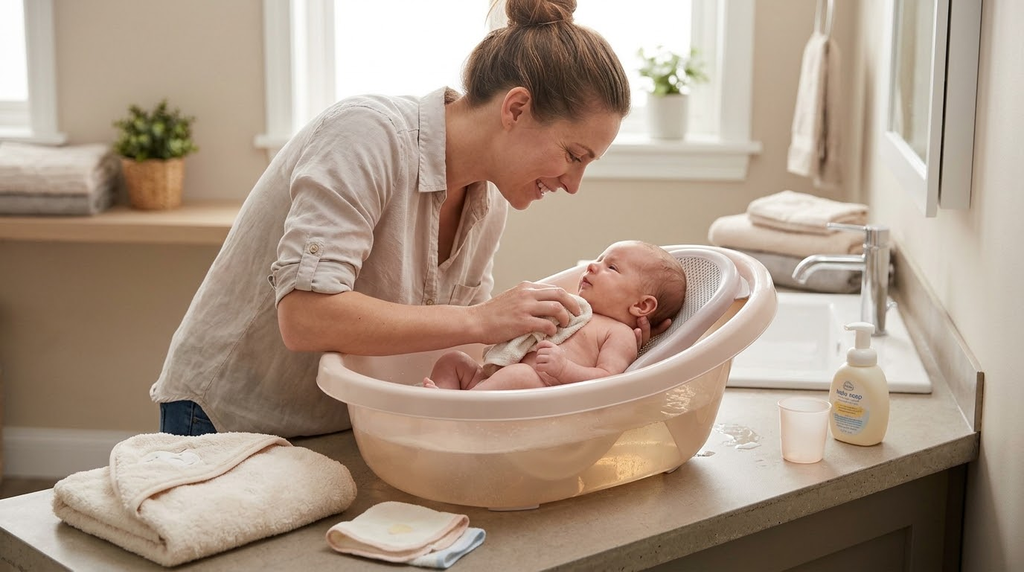
A baby bathtub can make bath time more manageable, especially for parents who are still learning how to handle a newborn comfortably. Many designs include supportive shapes that help position a small baby during bathing.
Choose a bathtub that is appropriate for your newborn’s size, stable when placed on a suitable surface, and easy to clean and dry. Prepare your towel, washcloth, and bathing supplies before starting. Most importantly, never leave your baby alone in or near water, even for a few seconds. Constant hands-on supervision is essential.
Basic Health and Grooming Products for Newborns
Your newborn’s health and personal care routine doesn’t need to involve a large collection of products. A few carefully selected supplies can help you manage basic grooming and recognize situations that require medical attention. Choose items specifically designed for babies and follow the instructions provided by their manufacturers. It is also helpful to ask your pediatrician for guidance on newborn hygiene, temperature checks, nail care, and suitable skincare products, especially during your baby’s first appointments.
16. Reliable Digital Baby Thermometer
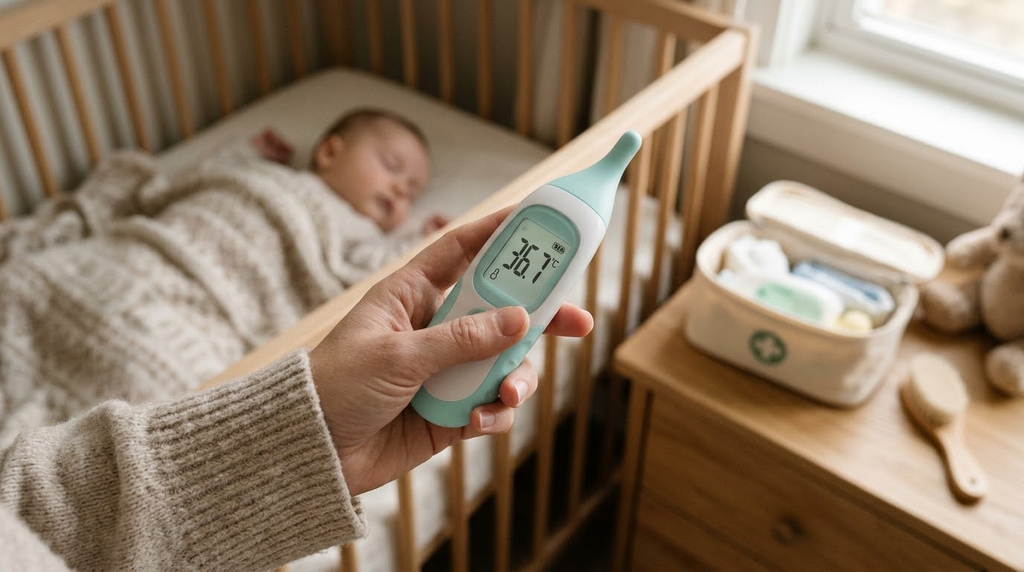
A digital thermometer is an important item to include in your baby’s basic health kit. It allows parents to check their newborn’s temperature when they seem unusually warm or unwell.
Choose a reliable thermometer and ask your pediatrician how to use it correctly for your baby’s age. For infants younger than three months, a temperature of 38°C (100.4°F) or higher requires immediate medical evaluation, even if the baby appears otherwise comfortable. Do not rely on touch alone to determine whether your newborn has a fever.
17. Baby Nail Clippers or Gentle Nail Files
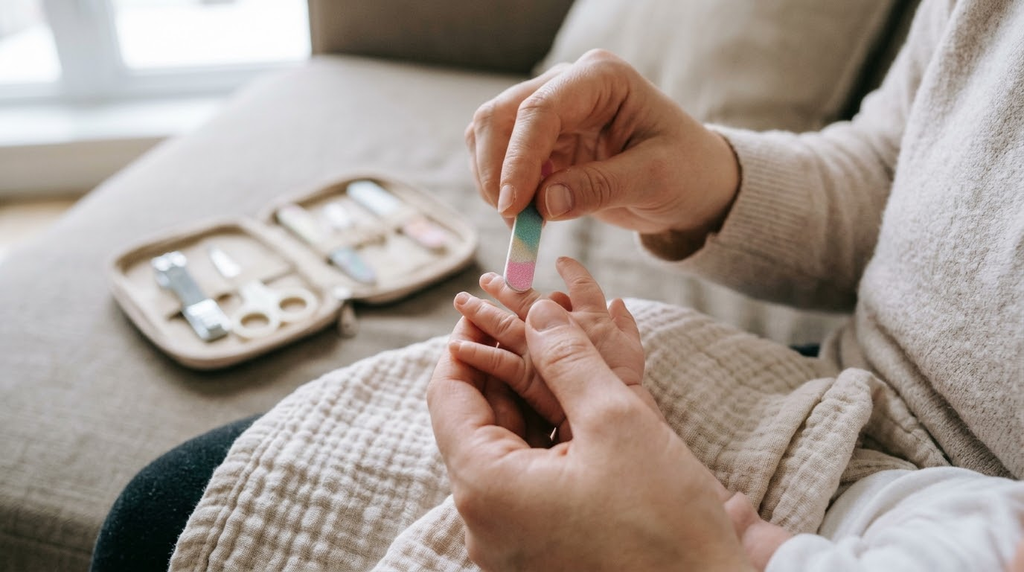
Newborn fingernails grow quickly and can sometimes be sharp enough to cause accidental scratches. Baby-sized nail clippers, scissors designed for infant use, or a gentle nail file can help keep them at a comfortable length.
Choose a grooming tool that is easy to hold and gives you good control. Trim your baby’s nails when they are calm, using adequate lighting so you can clearly see the nail edges. Avoid cutting too close to the skin. If you feel uncomfortable using clippers, a gentle file may be an easier alternative.
18. Soft-Bristled Baby Hairbrush
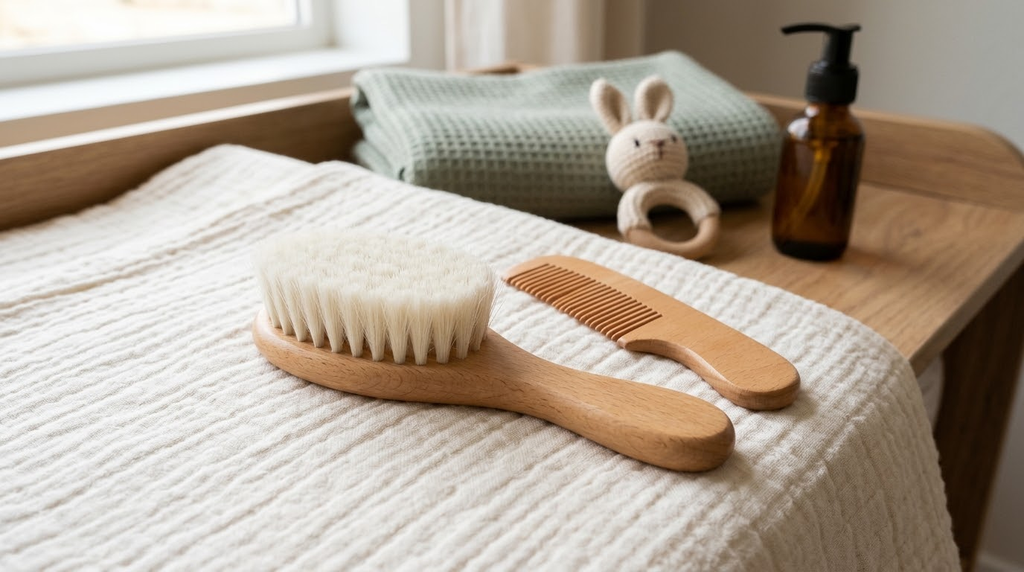
A soft baby hairbrush can help smooth your newborn’s hair and make basic grooming easier. Choose one with gentle bristles and a comfortable handle that allows you to brush without applying unnecessary pressure.
Some newborns have very little hair, while others are born with a fuller head of hair. Either way, an elaborate haircare routine is unnecessary. Brush gently and avoid irritating the scalp. If your baby develops cradle cap, ask your healthcare provider about suitable care rather than using harsh products or scratching affected areas.
19. Mild Baby Bath Wash
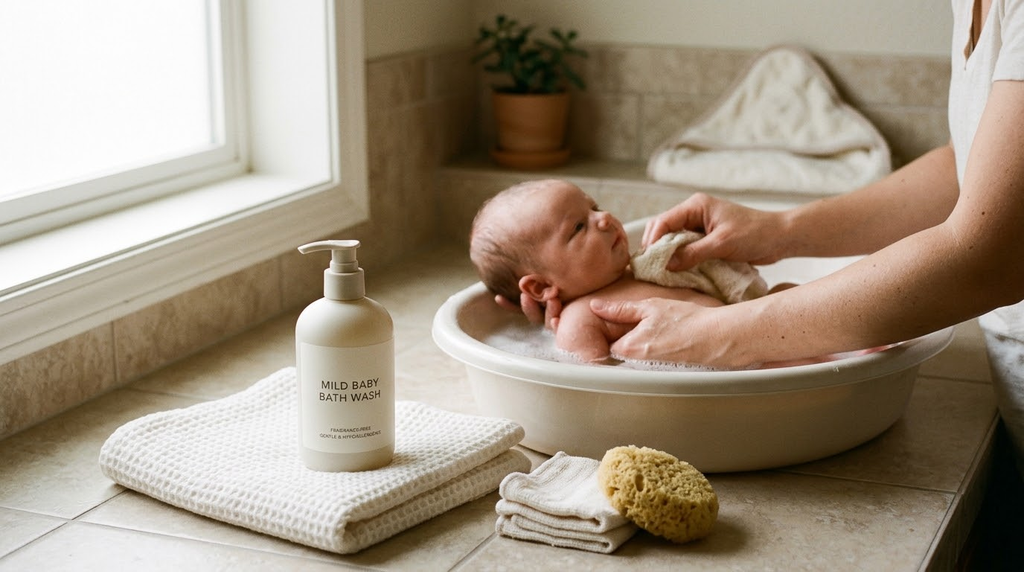
A gentle baby cleanser can be useful when your newborn needs more than plain water for bathing. Look for a fragrance-free product formulated for infant skin, and avoid buying several different soaps and lotions before knowing what your baby tolerates.
Newborns do not need a full bath every day. Depending on your baby’s needs, gentle cleaning of the face, neck folds, hands, and diaper area is often sufficient between baths. Use small amounts of suitable cleanser when necessary, rinse thoroughly, and avoid getting soap into your baby’s eyes.
20. Soft and Absorbent Hooded Towels

Baby hooded towels are practical accessories that help dry your little one after bath time. Their soft fabric can make the transition from bath to dressing more comfortable, while the hood provides additional coverage for the head.
Choose an absorbent material that feels gentle against your newborn’s skin. You don’t need an expensive collection; having two or three towels available can be enough for many families. Wash them regularly using a suitable detergent and allow them to dry completely before storing them.
Safe Sleeping and Nursery Must-Haves
Creating a safe sleeping environment should be one of your biggest priorities when preparing your newborn’s nursery. Although decorative furniture and cute accessories can make a room look beautiful, safety should always come first. Your baby needs an appropriate sleep space with a firm, flat, level surface and no loose objects. Choose nursery products that meet applicable safety standards and follow their manufacturer’s instructions. A simple, organized sleeping area is often more practical than a nursery filled with unnecessary accessories.
21. Safe Baby Crib or Bassinet

A suitable crib or bassinet is one of the most important purchases to make before your baby arrives. It provides a designated sleeping space designed for infant use and should meet applicable safety requirements.
Choose a product with a firm, flat, level mattress that fits properly without gaps around the edges. For every sleep, place your baby on their back and keep the sleep area free from pillows, loose blankets, stuffed toys, bumper pads, and other soft objects. Room-sharing, with your baby sleeping in their own separate sleep space, is recommended for at least the first six months. Avoid decorative baby nests, loungers, and inclined sleepers as substitutes for a safe crib or bassinet.
22. Properly Fitted Crib Sheets

Fitted crib sheets help keep your baby’s sleeping surface clean and comfortable. Having a few extra sheets available is useful because newborns can have diaper leaks, spit-ups, and other small accidents that require frequent changes.
Choose sheets specifically designed for your crib or bassinet mattress. They should fit securely without loose fabric, bunching, or exposed corners. Two to four sheets can be a practical starting supply, depending on how often you do laundry. Always use a fitted sheet only and avoid adding extra layers or soft bedding to your baby’s sleeping area.
23. Lightweight Wearable Baby Sleep Sack
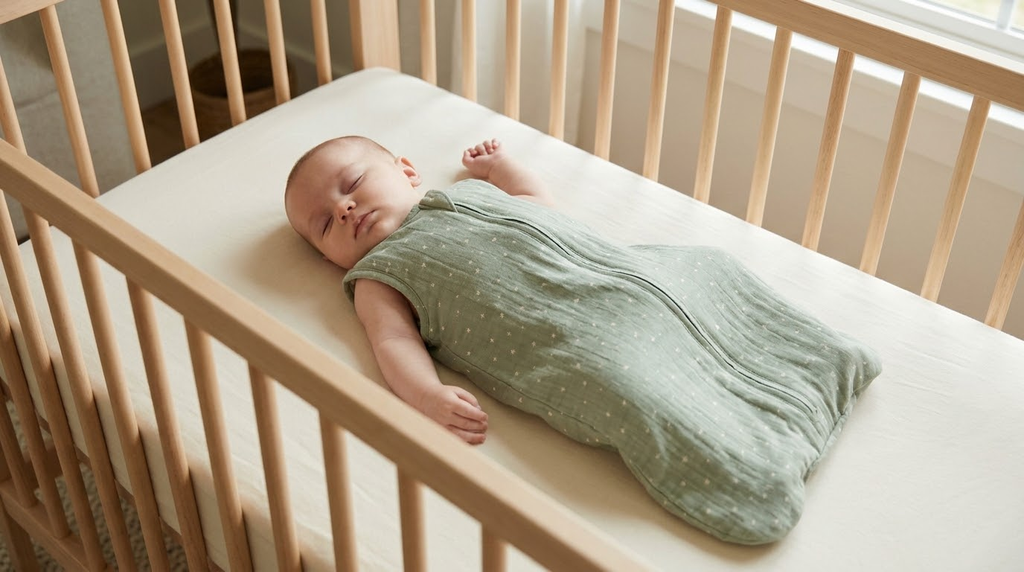
A wearable sleep sack can be a practical alternative to loose blankets when your newborn needs an additional layer for warmth. It is designed to provide coverage while allowing your baby to move comfortably inside the sleeping space.
Choose a properly sized, non-weighted sleep sack that suits your baby’s age, weight, and room temperature. Check the manufacturer’s guidance to ensure the fit is appropriate around the neck and arm openings. Avoid adding too many layers underneath, and always keep your baby’s head uncovered. A sleep sack should never restrict movement or replace the need for a safe sleeping surface.
Useful Baby Gear for Family Outings
Leaving home with a newborn requires a little more preparation than your usual errands. You’ll need a way to organize diapers, spare clothes, feeding supplies, and other everyday necessities. Choosing practical travel equipment can help make short trips and family visits less stressful. Before purchasing baby travel products, consider how frequently you’ll use them, whether they are easy to carry, and whether they meet relevant safety standards. Prioritize essential equipment first, particularly anything your baby needs for safe transportation.
24. Spacious and Organized Baby Diaper Bag
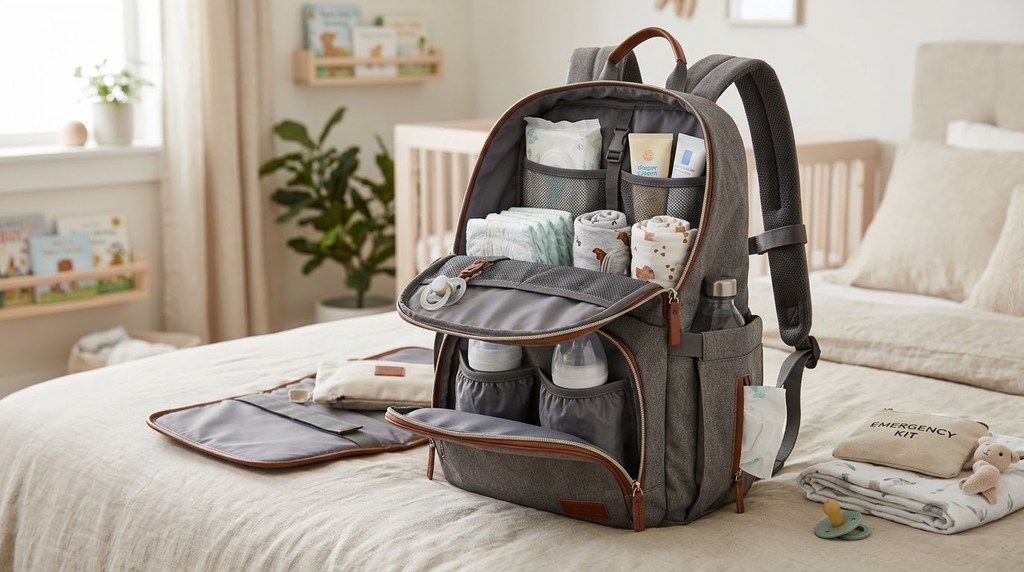
A diaper bag helps keep your newborn’s everyday supplies together when you’re away from home. Instead of searching through a regular handbag, you can organize diapers, wipes, spare clothes, and feeding accessories in designated compartments.
Look for a bag with comfortable shoulder straps, durable materials, and pockets that are easy to access. Additional features such as an insulated pocket or a portable changing mat may also be helpful. A practical tip is to keep a small emergency kit packed inside with diapers, wipes, one spare outfit, and a burp cloth so you’re always prepared for unexpected outings.
25. Properly Installed Rear-Facing Infant Car Seat

If your family travels by car, an appropriate rear-facing infant car seat is essential for your newborn’s very first journey home. Car seats are designed to help protect babies during sudden stops and collisions when correctly selected and installed.
Choose a seat that meets applicable safety standards, is suitable for your baby’s height and weight, and is compatible with your vehicle. Follow the manufacturer’s installation instructions and make sure the harness fits snugly. Avoid bulky jackets or thick clothing underneath the harness because these can affect its fit. When possible, have the installation checked by a qualified child passenger safety professional.